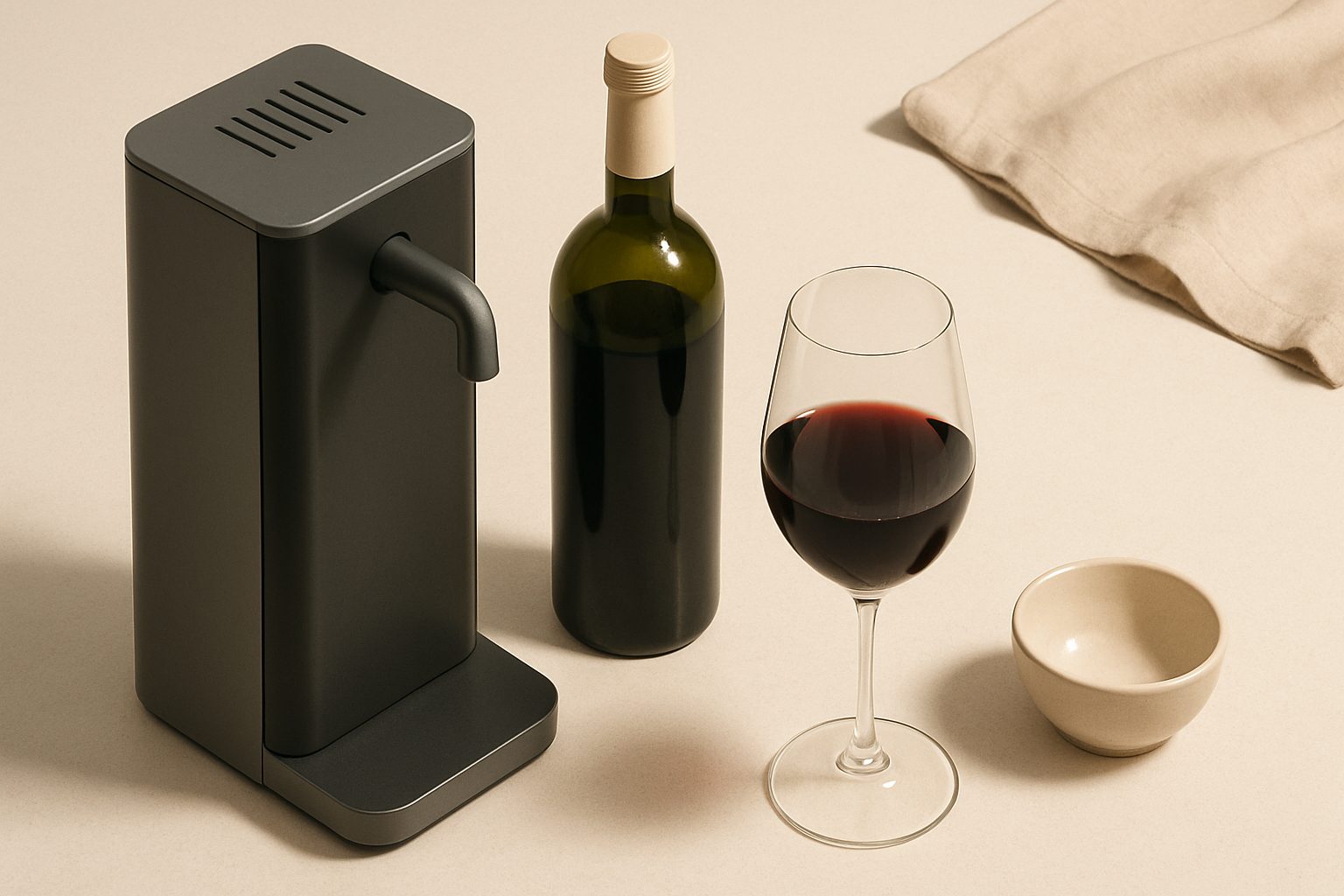
Wine Preservation Methods Compared: Argon Gas vs Vacuum vs Electric Dispenser
Once a bottle is open, wine oxidation begins immediately. Oxygen reacts with phenolic compounds and colour pigments, dulling flavour, browning reds, and turning whites flat within days. If you're serious about keeping wine fresh beyond a single sitting, you need to understand what each preservation method actually does—and why some work better than others.
How Wine Oxidation Works
Wine oxidation isn't dramatic. Unlike apple flesh browning in air, wine degrades chemically through slow reactions with dissolved oxygen. The culprit isn't the air in the glass—it's the headspace (the air pocket between wine and cork). That pocket contains roughly 21% oxygen. Every day it sits there, oxygen dissolves into the wine, degrading aroma compounds and colour.
Preservation methods succeed or fail based on one principle: how effectively they eliminate or prevent oxygen contact.
Argon Gas Method
Argon is an inert noble gas denser than air. When sprayed into a bottle, it sinks below the oxygen layer, creating a protective barrier. The oxygen-rich air floats above it, sealed off from the wine.
How it works in practice: You insert a thin tube through the foil, spray argon for 2–3 seconds, remove the tube, reseal with your original cork or a stopper. The gas costs £3–8 per replaceable canister (roughly 15 bottles per can).
Pros:
- Proven effective for up to two weeks (red wines longer than whites)
- No modification to the bottle or cork required
- Works with any bottle shape or closure
- Relatively cheap per use
Cons:
- Requires consistent technique—spray too little and you get incomplete coverage; too much wastes gas
- Only effective if your stopper actually seals; a poor cork lets gas escape
- Doesn't prevent all oxidation, just slows it significantly
- Canister disposal adds small environmental cost
Realistic performance: Reds stay drinkable for 10–14 days. Whites degrade faster—typically 5–7 days. High-tannin wines (Cabernet, Barolo) tolerate longer exposure; delicate, aromatic wines (Sauvignon Blanc, Pinot Grigio) don't.
Vacuum Method
Vacuum systems (brand examples: Vacu Vin) work by removing air from the bottle. A rubber stopper fits inside the bottle neck, and a manual pump sits on top. As you pump, air is extracted, creating negative pressure that pulls the stopper deeper into the bottle.
How it works: Insert stopper, pump 5–10 times until resistance increases, remove pump, leave stopper in place. No consumables beyond the stoppers themselves (reusable for 5–10 years, roughly £15 for a set of four).
Pros:
- Lowest running cost—one-time purchase, minimal replacement costs
- Completely airtight once sealed; no oxygen can enter
- Simple, mechanical, no batteries or electricity
- Stopper doubles as a convenient daily closure
Cons:
- Manual effort every time (some people find pumping tedious)
- Gentle wines can suffer—the sudden pressure change may accelerate volatilisation of delicate aromatic compounds
- Less effective for fizzy wines or champagne (vacuum collapses bubbles)
- Stopper can drift up over time, breaking the seal; needs periodic re-pumping
- Requires consistent cork condition—a damaged neck or warped stopper fails silently
Realistic performance: Reds stay fresh 7–10 days reliably. Whites 4–6 days. Sparkling wines: not recommended.
Electric Wine Dispensers
These are the premium option. Brands like Coravin and Vinovac use a motorised pump or coil system to extract wine whilst simultaneously injecting inert gas (usually nitrogen or argon) to replace the extracted volume. No air ever enters the bottle.
How it works: A hollow needle punctures the foil and cork, the system extracts wine to your glass, inert gas fills the void, the needle retracts, the cork naturally reseals. Multiple glasses can be poured over weeks without removing the cork.
Pros:
- Genuinely extends wine life—some bottles stay fresh for 4–8 weeks, occasionally longer
- No manual effort beyond pressing a button
- Elegant solution; cork never removed, bottle never fully opened
- Works with any bottle type, including expensive aged wines
- No consumable costs once purchased (though gas refills run £15–25 per cartridge for 10–15 pours)
Cons:
- High upfront cost: £200–500 for a capable model
- Motorised complexity means potential repairs if the unit fails
- The needle puncture technically damages the cork (though usually invisibly)
- Not suitable for very old wines with fragile, crumbly corks
- Requires specific needle sizes; some unusual bottles or closures don't fit
- Gas cartridge disposal adds environmental overhead
Realistic performance: Four to eight weeks for most wines, sometimes longer for reds and fortified wines. Premium Burgundy, Bordeaux, and aged Barolo show the most dramatic benefit.
Decision Framework
Budget tier (under £20): Argon gas or a basic vacuum pump. Both work; choose based on whether you prefer buying consumables (argon) or occasional manual effort (vacuum).
Mid-range (£30–100): A quality vacuum pump like Vacu Vin (durable, widely available) or a smaller electric unit.
Premium (£200+): Coravin-style electric dispenser if you buy wine regularly and want to keep opened bottles for weeks, or if you drink aged wines and want near-perfect preservation.
The Honest Take
None of these methods is flawless. Argon and vacuum slow oxidation but don't prevent it. Electric dispensers genuinely extend life, but the cost only justifies itself if you regularly leave bottles open or buy expensive wine.
The real variable isn't the method—it's how well you execute it. A carefully sealed vacuum bottle outlasts a carelessly sealed argon one. A Coravin fails silently if the needle clogs. Perfect preservation doesn't exist at any price point, only better preservation.
If you open wine daily, an electric dispenser makes sense. If you open sporadically, argon gas or vacuum is more practical. The key is matching the method to your actual wine habits, not buying the most expensive option hoping science will fix sloppy technique.
More options
- Electric Home Wine Dispensers (Amazon UK)
- Wine Preservation Systems (Argon / Vacuum) (Amazon UK)
- Countertop Wine Cooler Dispensers (Amazon UK)
- Box Wine Dispensers & Bag-in-Box Taps (Amazon UK)
- Wine Dispenser Gift Sets (Amazon UK)