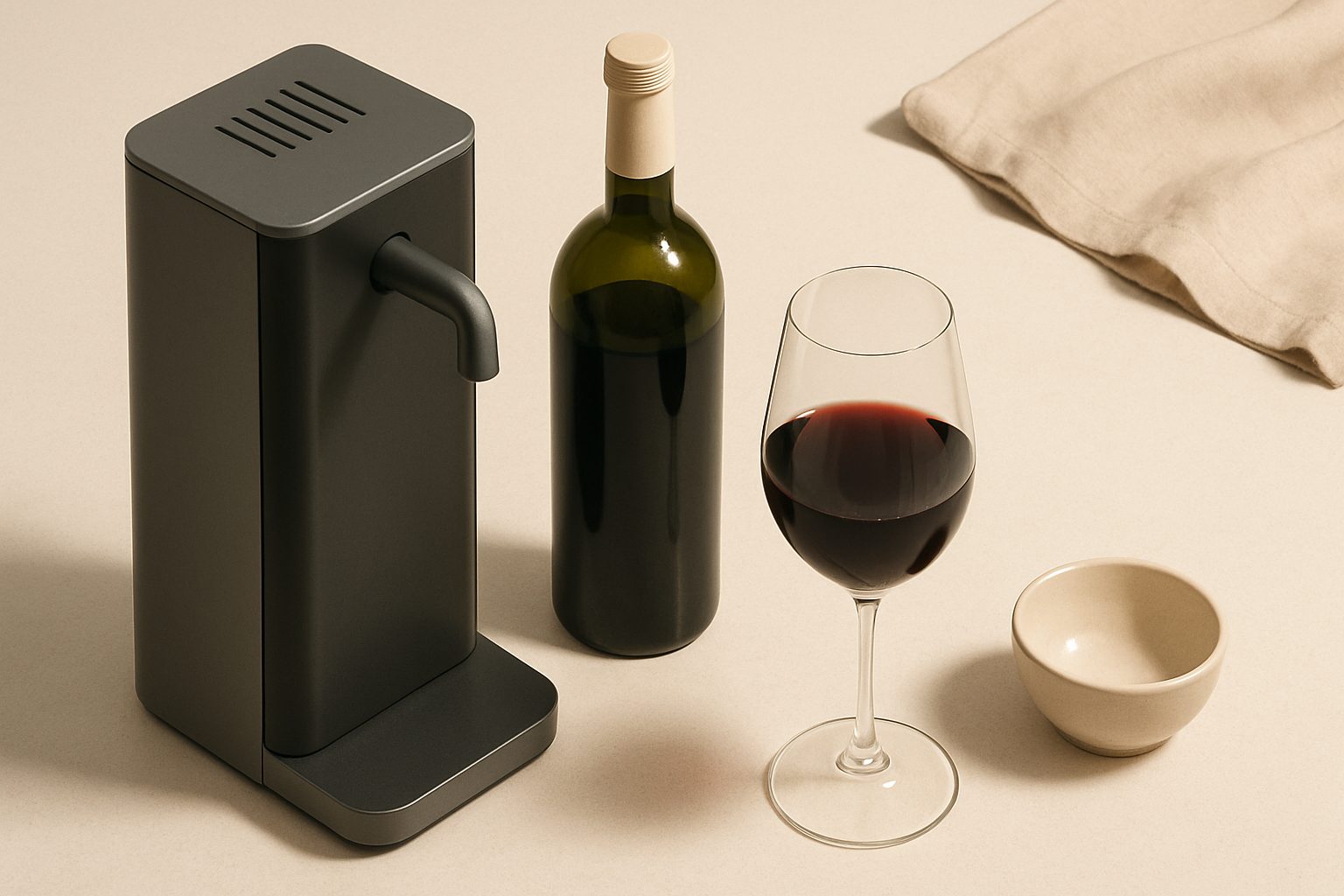
Wine Dispenser vs Wine Cooler: Which Should You Actually Buy?
Wine dispensers and wine coolers solve different problems. Confusing them is the quickest way to buy the wrong kit for your needs—and waste money on features you don't actually want.
A wine cooler is a dedicated fridge that stores unopened bottles at the ideal temperature. A wine dispenser opens bottles and serves wine by the glass whilst keeping the rest of the bottle fresh. They're not interchangeable. Here's how to pick the right one.
Head-to-Head Comparison
| Feature | Wine Cooler | Wine Dispenser | |---------|------------|----------------| | Primary function | Stores unopened bottles | Serves and preserves open bottles | | Best for | Collectors; restaurants with high turnover | Bars; serious home drinkers; wine by the glass | | Capacity | Typically 8–50 bottles | Usually 1–4 bottles open at once | | Opened wine longevity | N/A—for unopened stock | 2–4 weeks (preserved under nitrogen/argon) | | Temperature control | Single or dual zone (12–18°C) | Varies; some have none | | Noise level | Quiet to moderate | Varies; pump-based units are noisier | | Installation | Freestanding or built-in options | Counter-mounted or furniture-mounted | | Price range (UK) | £200–£1,500+ | £400–£2,000+ | | Maintenance | Minimal; annual clean | Filter cartridges (£30–£60 per year) |
What a Wine Cooler Actually Does
A wine cooler (or wine fridge) maintains a constant temperature, usually between 7–18°C depending on the model. This keeps your collection ready to drink without premature ageing. The fridge protects wine from light, temperature swings, and vibration—three of the main enemies of proper storage.
When a cooler makes sense:
- You buy bottles to keep for months or years
- You entertain regularly and want a ready-supply of properly stored wines
- You have shelf space and can dedicate it to wine storage
- You prefer not to think about opened bottles going off
Most domestic wine coolers hold 12–30 bottles. They're popular in home kitchens, dining rooms, and wine bars where stock doesn't turn over instantly. Even a small 8-bottle cooler takes the guesswork out of temperature: room-temperature wine tastes flat and ages poorly, whilst a fridge designed for wine keeps everything in the sweet spot.
What a Wine Dispenser Actually Does
A wine dispenser opens a bottle and keeps it fresh by pumping inert gas (nitrogen or argon) into the bottle, displacing oxygen. This slows oxidation dramatically. A opened bottle lasts 2–4 weeks instead of 3–5 days.
The dispenser serves wine by the glass via a tap or pour system. Some use vacuum-sealed corks instead of gas—these are cheaper but less reliable, as air gradually seeps back in.
When a dispenser makes sense:
- You drink different wines regularly but in small quantities
- A bottle might sit open for weeks (you want to taste that Burgundy without finishing it)
- You serve wine by the glass to guests—you want fresh wine, not oxidised dregs
- You like experimenting with premium bottles without committing to the whole thing at once
The trade-off: wine dispensers are more expensive than coolers, and the cartridge replacements (£30–£60) add up if you use the system heavily.
Real-World Use Cases
Buy a wine cooler if: You're stocking wine for regular entertaining, you've accumulated a collection, or you want a ready supply of properly stored bottles. It's a "set and forget" solution. You'll use it for 20+ bottles sitting quietly in your home, each one ready to drink whenever you decide.
Buy a wine dispenser if: You're the type who opens a different wine each week, you want to taste premium wines without finishing a bottle, or you're running a small bar operation. The monthly cartridge cost is worth it if you're actually using the preservation system multiple times per week.
Buy both if: You're serious enough about wine to have 30+ bottles in storage and you regularly drink wine by the glass. You'd use the cooler for long-term stock and the dispenser for current drinking bottles. Some wine bars do exactly this—the cooler keeps tomorrow's stock fresh, the dispenser serves today's selections.
Cost Perspective
Wine coolers start around £200 (small, single-zone) and max out around £1,500 for a quality built-in unit with dual zones. A bottle of wine costs £8–£50 at retail; a cooler pays for itself if it prevents premature ageing on even a handful of decent bottles.
Wine dispensers are pricier—£400–£800 for a reliable system—but again, they pay for themselves if you buy premium bottles and actually use the preservation. Spending £30 on a cartridge to keep a £60 bottle drinkable for three weeks is sound maths. Buying a dispenser and then opening bottles that go unfinished is not.
The Bottom Line
A wine cooler stores. A wine dispenser serves and preserves. They address different needs, and most homes and bars benefit from one or the other—not both.
If you're buying today, ask yourself: Am I storing unopened bottles, or preserving open ones? That single question settles it. Choose the wrong answer and you'll end up with expensive, underused kit gathering dust.
More options
- Electric Home Wine Dispensers (Amazon UK)
- Wine Preservation Systems (Argon / Vacuum) (Amazon UK)
- Countertop Wine Cooler Dispensers (Amazon UK)
- Box Wine Dispensers & Bag-in-Box Taps (Amazon UK)
- Wine Dispenser Gift Sets (Amazon UK)