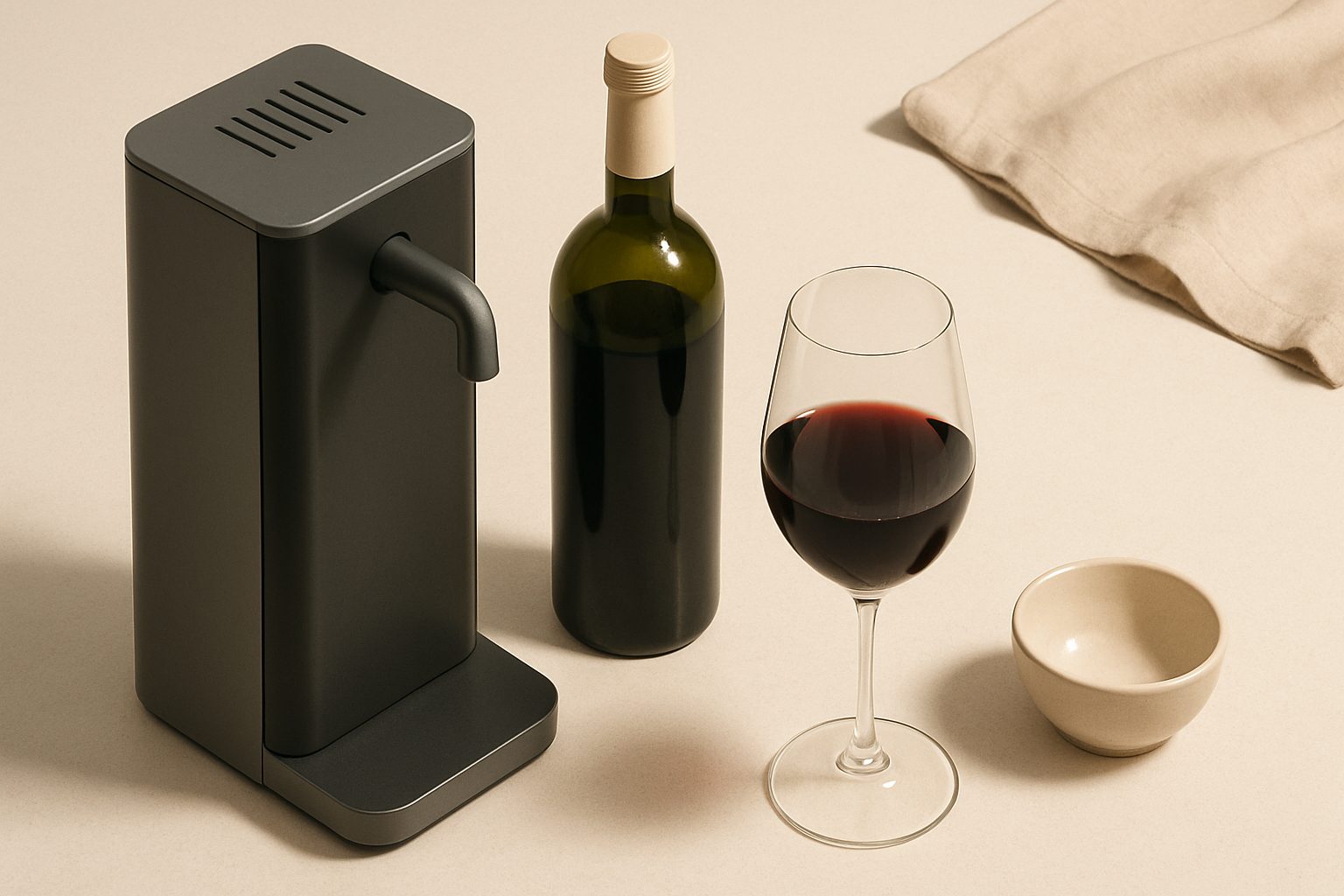
What Is a Home Wine Dispenser and How Does It Work?
If you've ever opened a bottle of wine, only to watch it deteriorate over a few days, you'll understand why home wine dispensers have become increasingly popular in UK households. These machines preserve open bottles whilst keeping wine at the ideal serving temperature—eliminating waste and making entertaining easier. But how exactly do they work, and which type is right for your home?
What Is a Home Wine Dispenser?
A home wine dispenser is a cabinet or standalone unit designed to store multiple bottles of wine and pour them without fully opening each bottle. Unlike a traditional wine fridge that simply keeps bottles cool, a wine dispenser actively preserves the wine inside once you've opened it, then serves it at the touch of a button or via a tap.
They're typically freestanding units that hold between 4 and 20 bottles, though some luxury models offer more. Most incorporate temperature control to keep red and white wines at their proper serving temperatures—essential for flavour and aroma. The real innovation is in the preservation mechanism: instead of letting air into the bottle and degrading the wine, a dispenser uses various methods to keep your open bottles fresh for weeks rather than days.
The Main Types of Dispensing Mechanics
Home wine dispensers use several different technologies to pour wine whilst keeping the remainder fresh. Understanding these will help you choose one suited to your drinking habits and budget.
Gas Injection Systems
Gas injection dispensers, often called "wine by the glass" systems, are the most common commercial technology adapted for home use. When you press the button to pour, inert gas—typically nitrogen or a nitrogen-argon blend—is injected into the bottle, pushing wine out through a tube.
The gas itself never touches the wine; it sits above it, creating an oxygen-free barrier. This prevents oxidation, the chemical process that causes wine to turn vinegary. Once you've finished pouring, the pressure equalises and the gas blanket remains, protecting the wine from your next visit. Most gas systems can keep wine fresh for 4–8 weeks.
Gas dispensers are reliable and effective, though you'll need to replace cartridges periodically. Some higher-end models offer refillable gas canisters, which is more economical if you're a frequent user.
Vacuum Seal Systems
Vacuum dispensers work on a simpler principle: removing air rather than replacing it. A rubber seal covers the bottle opening, and a hand pump removes air from inside the bottle, creating a partial vacuum. This stops oxidation by eliminating oxygen.
These systems are affordable and require no cartridges or electrics. However, they're less effective than gas systems—a vacuum seal typically keeps wine fresh for 1–3 weeks—and they demand a bit more effort each time you pour. You're also limited to a single bottle at a time, making them less convenient if you like to have reds and whites open simultaneously.
Gravity Pour Systems
Some dispensers use gravity to solve the preservation puzzle. Bottles are stored upside-down in a chilled cabinet, and wine flows down into a collection chamber where it's kept cool and isolated from air. You simply turn a tap to pour.
These systems are elegant and require no gas or mechanical intervention, but they only work with bottles specifically designed for the unit, and they take up considerably more space. They're also less common for home use than gas or vacuum systems.
Electric Pump Dispensers
More expensive models use an electric pump system to draw wine from bottles sealed with special preservation corks or caps. The pump pulls wine into a temperature-controlled reservoir, then dispenses it via a tap.
Electric pump systems offer excellent preservation—often 6–10 weeks or longer—and they're highly automated. The downside is cost and complexity; they require power and can be fiddly to maintain. They're typically chosen by serious wine enthusiasts or those with large collections.
Preservation and Temperature Control
The preservation benefit is the real reason people invest in wine dispensers. An open bottle of wine exposed to air degrades within 3–5 days, sometimes faster with lighter whites. A quality dispenser extends this dramatically, cutting waste and allowing you to enjoy a bottle at your own pace.
Temperature control is equally important. Wine served too warm tastes flat and flabby; served too cold, the delicate flavours close up. Most home dispensers maintain separate temperature zones—typically 5–12°C for whites and 14–18°C for reds—so both are ready to pour without decanting between fridge and room.
This dual-zone benefit is especially useful if you entertain regularly. Instead of opening multiple bottles and hoping they don't go off, you can have several on hand, perfectly chilled and preserved.
Choosing the Right Dispenser for Your Home
Your choice depends on how much wine you drink, how often you entertain, and your budget. Vacuum systems suit occasional drinkers who value simplicity and low cost. Gas injection models are the sweet spot for regular drinkers who want reliability without breaking the bank. Electric pumps appeal to collectors and hospitality enthusiasts willing to invest in top-tier preservation and convenience.
For a detailed comparison of specific models available in the UK, see our roundup of the best home wine dispensers and our guide to wine dispensers by price point.
Final Thoughts
Home wine dispensers remove a real frustration: the guilt of waste and the hurry to finish bottles before they spoil. Once you understand the mechanics—whether gas, vacuum, pump, or gravity—you can match the technology to your lifestyle and enjoy wine on your terms, not the clock's.
More options
- Electric Home Wine Dispensers (Amazon UK)
- Wine Preservation Systems (Argon / Vacuum) (Amazon UK)
- Countertop Wine Cooler Dispensers (Amazon UK)
- Box Wine Dispensers & Bag-in-Box Taps (Amazon UK)
- Wine Dispenser Gift Sets (Amazon UK)