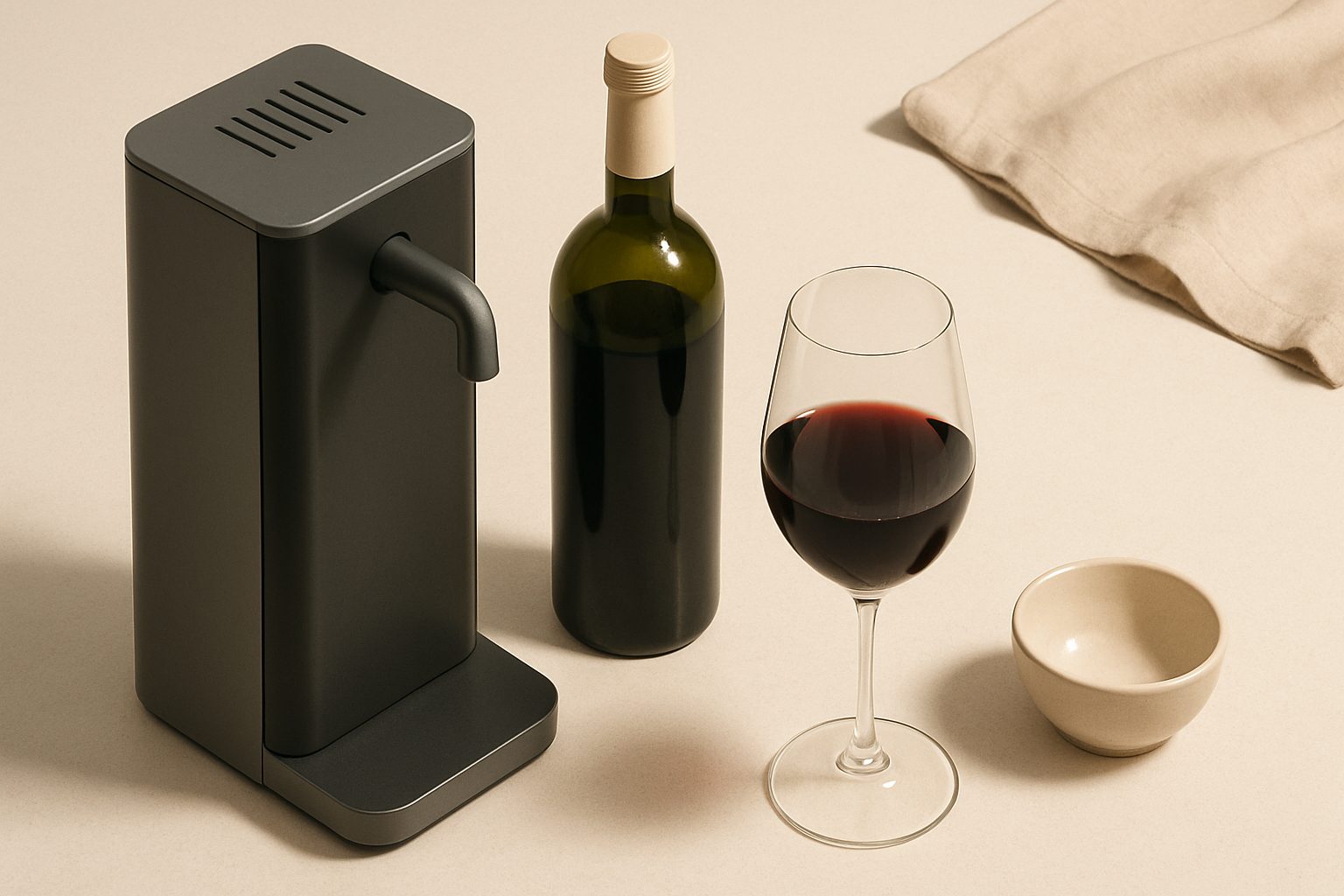
How to Keep Wine Fresh After Opening: Every Method Ranked
Once you've opened a bottle, oxidation begins immediately. Oxygen breaks down the compounds that give wine its flavour and colour, turning a vibrant glass into something flat and dull within days. If you're a regular wine drinker—whether you enjoy a glass with dinner or like to explore different bottles—knowing how to preserve that opened bottle properly will save you money and waste.
The good news is that several proven methods exist, each with different costs, convenience levels, and real-world effectiveness. Some are quick fixes for occasional drinkers; others make sense if you like to keep bottles open longer. Let's work through them honestly.
Re-Corking: The Basic, Free Option
The simplest approach is to push the original cork back in. It's free and takes five seconds. But let's be clear about the limitations: a used cork has already expanded, so it doesn't seal as tightly the second time around. It'll slow oxidation but won't stop it.
Reality check: This works for one or two days if you store the bottle upright in a cool, dark place. After that, you'll notice flavour degradation. If you've lost the cork, a basic plastic wine stopper from any supermarket (£1–2) does roughly the same job.
Vacuum Stoppers: Affordable but Incremental
A vacuum stopper removes air from the bottle and seals it with a rubber plug. Popular brands like Vacu Vin cost around £5–8 and are reusable.
How effective? They genuinely do slow oxidation compared to a loose cork. Most people find they buy you 3–5 extra days. The catch is that achieving a perfect seal takes a bit of practice, and over time the rubber degradation means they gradually work less well.
Best for: Occasional drinkers who want a simple, low-cost solution they can stash in a kitchen drawer.
Argon Gas: The "Just Enough" Middle Ground
Argon displaces oxygen above the wine, creating an inert atmosphere. A small canister costs around £15–20 and typically covers 120–150 bottle closures. You spray in the gas, then cork the bottle normally.
Effectiveness: Argon actually works. If you've sealed properly, you're looking at 2–3 weeks of reasonable preservation, sometimes longer. It's more reliable than vacuum stoppers because you're not relying on a physical seal degrading over time.
The trade-off: You need to buy canisters regularly if you drink opened bottles often. It's not something you can grab on impulse; you have to plan ahead.
Best for: Wine enthusiasts who open multiple bottles a week and want reliable, no-fuss preservation without spending a fortune.
Refrigeration: Works Better Than People Think
Cold slows oxidation significantly. Simply moving an opened bottle from room temperature into the fridge extends its life substantially—often by several days compared to leaving it on the counter.
What actually happens: A red wine stored cold will taste acceptable for 3–5 days. White wine and sparkling wine last even longer because they're more stable. You can always let a red come back to room temperature before pouring.
Why people underestimate this: The assumption is that refrigeration somehow damages wine. It doesn't. What damages wine is heat and light. Darkness and cold are actually your friends.
Best for: Anyone with an opened bottle they want to keep for a few extra days without buying anything.
Wine Preservation Dispensers: The Most Practical Long-Term Solution
If you regularly drink wine but don't finish bottles in one sitting, a wine preservation dispenser—sometimes called a wine preservation system—is genuinely the most effective option. Models range from £40 to over £200.
How they work: The best dispensers use argon gas to blanket the wine and a tap system so you pour without exposing the bottle to air each time. Some work with your existing bottles; others are designed as closed systems.
Real advantages:
- Bottles stay fresh for weeks, sometimes months
- No need to handle corks repeatedly or buy consumables
- You only access what you're drinking, not the whole bottle
- They look like proper bar equipment—a nice addition to a kitchen
Honest limitations: The initial cost is higher. If you're a one-bottle-a-week drinker, you're paying for capability you won't fully use. If you open three or four bottles a week, though, the maths shifts quickly in their favour.
Best for: Regular wine drinkers who like variety and keep multiple bottles open, or anyone who finds themselves pouring wine down the sink because it's oxidised.
The Ranking: What Actually Works Best
- Wine preservation dispensers — best overall if you drink wine regularly
- Argon gas — best value-for-money if you want reliability
- Refrigeration — best free or nearly-free option for 3–5 days
- Vacuum stoppers — cheapest entry point, inconsistent results
- Re-corking — only option if you have nothing else
The right choice depends on your drinking habits. A casual drinker who opens a bottle once a fortnight just needs a decent plastic stopper and the fridge. Someone who enjoys wine three or four times a week will see their money back quickly from a preservation dispenser, since they'll waste far less wine.
Don't overthink this. Most opened bottles are fine for at least a few days with basic care. It's only when you start keeping bottles open longer—or opening many at once—that the better methods become worth the investment.
More options
- Electric Home Wine Dispensers (Amazon UK)
- Wine Preservation Systems (Argon / Vacuum) (Amazon UK)
- Countertop Wine Cooler Dispensers (Amazon UK)
- Box Wine Dispensers & Bag-in-Box Taps (Amazon UK)
- Wine Dispenser Gift Sets (Amazon UK)