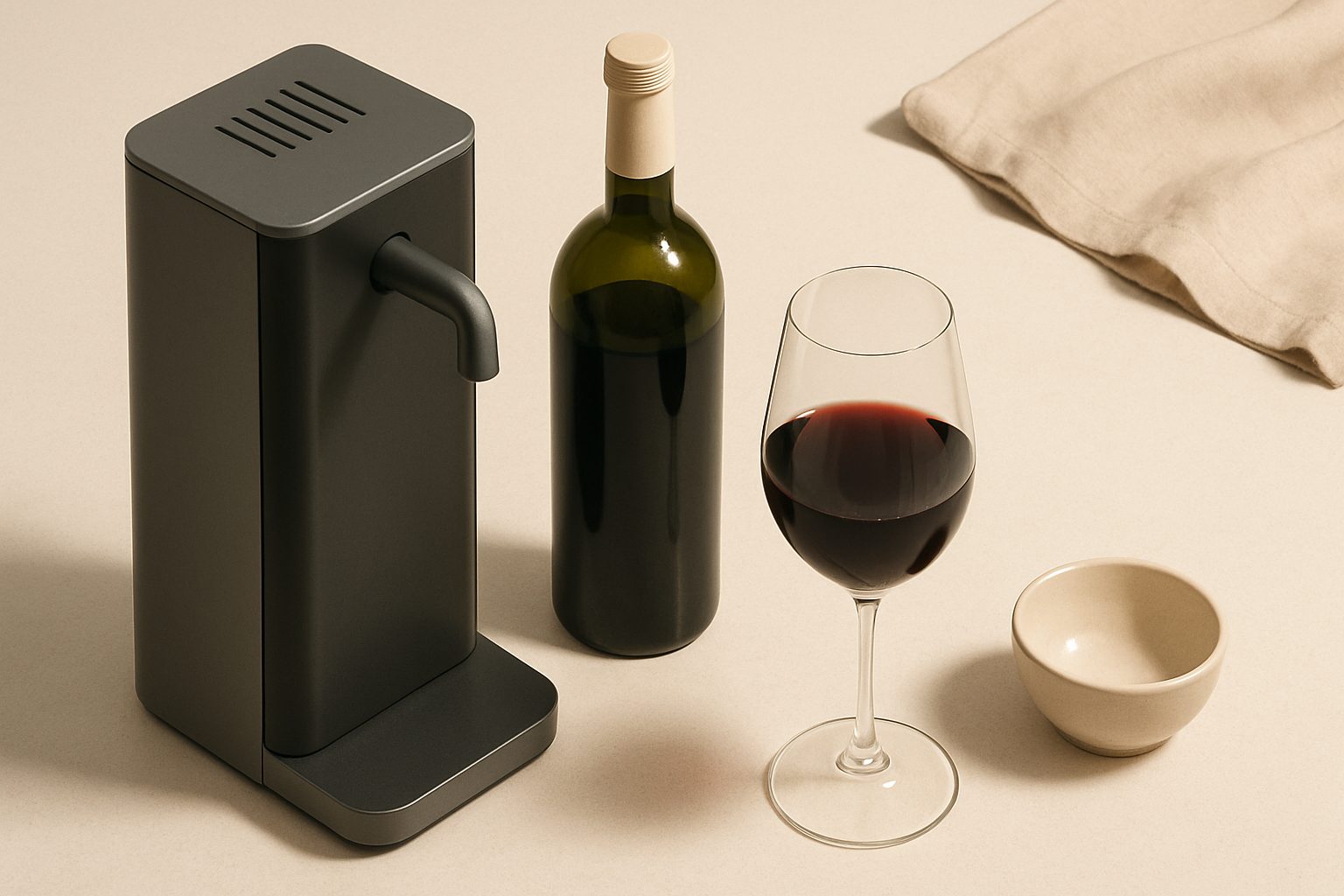
How to Clean a Wine Dispenser at Home: Step-by-Step Guide
Wine dispensers keep your bottles fresh and ready to pour, but they only work properly if you clean them regularly. A dirty dispenser can taint wine flavour, cause blockages in the tap mechanism, and harbour bacteria. Unlike commercial units that get professional servicing, home dispensers rely entirely on you for maintenance. The good news is that cleaning is straightforward once you know the right approach.
Why Regular Cleaning Matters
Wine dispensers work by sealing the bottle and releasing wine through a tap as you pour. Over time, residual wine inside the dispenser oxidises and leaves deposits on internal surfaces. These deposits can affect taste and accelerate spoilage of the wine still in the bottle.
The tap mechanism is particularly vulnerable. Wine deposits harden around the valve, making it stiff or causing intermittent flow. If you leave a dispenser unused for weeks, these deposits can become stubborn and difficult to shift. Cleaning every two to four weeks—or immediately after the bottle is empty—prevents problems before they start.
Tools You'll Need
Most of what you need is already at home. You'll need lukewarm water, white vinegar or a specialised wine dispenser cleaning kit, a soft bottle brush or pipe cleaner, a small sponge, and lint-free cloths. Avoid abrasive scouring pads, which can scratch internal surfaces and create microscopic cracks where bacteria hide.
A dedicated cleaning kit—usually containing cleaning tablets and brushes specifically sized for dispenser components—is worth considering if you clean frequently. Amazon stocks several UK-branded options that cost between £8 and £20. They make the job faster and more thorough, especially for removing stubborn mineral deposits from hard water.
Step-by-Step Cleaning Process
Prepare the dispenser. Remove the bottle (if it's not empty) and place the dispenser over a sink. If there's wine remaining inside, pour it out first. Some dispensers have a drainage valve at the base—check your manual and open it if available.
Clean the tap mechanism. This is the most important step. The tap is where wine residue accumulates fastest. Run warm water through the tap for 30 seconds, holding a cloth beneath to catch drips. If the tap is stiff or won't flow, soak it in equal parts white vinegar and warm water for 10–15 minutes. Use a small brush or pipe cleaner to gently work the bristles around the tap's interior opening. Don't force it—patience works better than pressure.
Rinse internal surfaces. Pour warm water into the dispenser's main chamber and swirl it around for 20 seconds, allowing the water to run through the tap. Repeat this twice. On the second rinse, use water slightly warmer than you'd use for washing hands—hot water is unnecessary and risks warping plastic components on some models.
Clean the bottle seat. Where the bottle neck meets the dispenser, wine can leak and crystallise. Use a damp sponge or cloth to wipe this junction thoroughly. If there's stubborn dried wine, apply a vinegar-soaked cloth and let it sit for five minutes before wiping.
Deep clean if needed. If the dispenser hasn't been cleaned for several weeks or the tap is sluggish, prepare a soaking solution: one part white vinegar to two parts warm water. Submerge removable components (if your model allows it) for 20 minutes. For dispensers with sealed designs, pour the solution into the main chamber, leave for 15 minutes, then rinse very thoroughly with fresh water—vinegar residue will make wine taste unpleasant.
Dry completely. This step prevents mineral deposits and bacterial growth. Use a lint-free cloth to wipe all external surfaces and the bottle seat. For internal drying, place the dispenser upright with the tap open (over a sink) for 30 minutes so gravity drains remaining moisture.
Cleaning Schedule and Best Practices
Empty bottles should be cleaned immediately. The longer wine sits inside, the harder deposits are to remove. If you use the same bottle continuously, clean the dispenser every four weeks even if the bottle isn't finished.
Store your dispenser in a cool place away from direct sunlight. Avoid leaving wine dispensers in the fridge for extended periods—the cold can cause condensation inside, promoting mould growth. Room temperature (around 16–18°C) is ideal for both wine preservation and dispenser hygiene.
Never use bleach or harsh chemical cleaners on wine dispensers. They leave residual odours that permeate wine and can damage seals and valves. Vinegar and water is just as effective and entirely food-safe.
When to Replace Components
If the tap still leaks or flows unevenly after thorough cleaning, the internal valve seal may be worn. Many dispensers have replaceable tap mechanisms available separately—check whether yours does before assuming the entire unit needs replacing. Similarly, if the rubber seal around the bottle seat has cracked or hardened, replacement seals (often £5–£10) restore the watertight seal.
Regular cleaning extends the lifespan of your dispenser and ensures every glass of wine tastes as intended. It takes 10 minutes and prevents costly repairs or early replacement.
More options
- Electric Home Wine Dispensers (Amazon UK)
- Wine Preservation Systems (Argon / Vacuum) (Amazon UK)
- Countertop Wine Cooler Dispensers (Amazon UK)
- Box Wine Dispensers & Bag-in-Box Taps (Amazon UK)
- Wine Dispenser Gift Sets (Amazon UK)