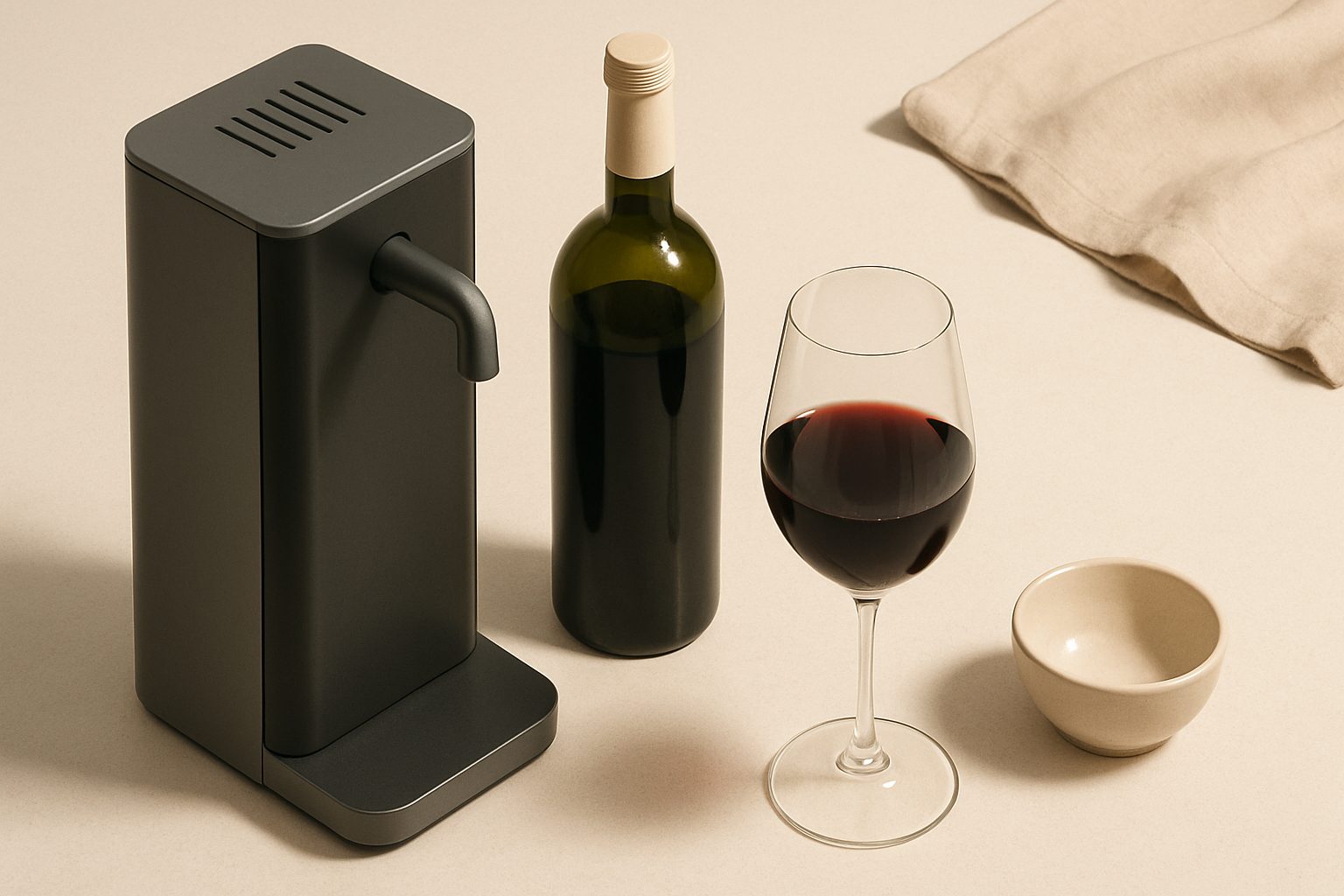
Electric vs Manual Wine Dispenser: Which Is Better for Home Use UK?
Wine dispensers are becoming a practical investment for UK homes where wine storage matters. Whether you're keeping a dozen bottles on rotation or seriously protecting a collection from oxidation, dispensing systems have genuinely improved how long open bottles last. The choice between electric and manual models, though, involves real trade-offs in cost, convenience, and noise—and the better option depends on your actual usage patterns.
How They Work: The Core Difference
Manual wine dispensers use an argon or nitrogen cartridge system. You insert a hollow needle through the bottle's foil and cork, charge the bottle with inert gas from a small canister, and then pull the tap to pour. The gas creates pressure that pushes wine out without oxygen entering.
Electric dispensers work differently. Most use a small motorised pump that draws wine up a thin tube inserted into the bottle. This avoids injecting gas entirely. Some models sit inside the fridge; others are countertop units with a separate chilling function. A few high-end versions use vacuum systems to remove air instead of adding gas.
Both methods genuinely extend a bottle's drinkability—from days to several weeks for manual systems, up to four weeks or more with electric models.
Cost: The Upfront and Running Expense
Manual dispensers are notably cheaper to buy. A basic kit with a trigger mechanism and several argon cartridges costs £25–£60. Replacement cartridges run £8–£15 for a pack. Over a year of moderate use (two or three bottles per week), cartridge costs add up to roughly £80–£120.
Electric dispensers start higher: £80–£200 for mid-range countertop models, £150–£400 for fridge-integrated units. Running costs are minimal—mostly electricity, which adds pennies per week. Once purchased, there are no consumables to replace (cartridges) unless something breaks.
The break-even point is around 18–24 months of regular use. If you're a casual drinker opening bottles once a month, manual stays cheaper. If you're regularly drinking open bottles across a week, electric becomes the more economical choice.
Ease of Use: Practical Daily Life
Manual dispensers require a two-step process: charge the bottle, then pour. This is straightforward but adds friction. You need to keep cartridges in stock, and a dud cartridge mid-week is annoying. Charging takes ten seconds, but it's one more thing to do.
Electric dispensers are faster—press a button, pour, done. No cartridge management. They're particularly convenient if you're pouring multiple glasses for guests or decanting wine regularly. Countertop models sit on the side, ready to use. Fridge models are even more seamless: grab a glass, pour cold wine, walk away.
The real friction with electric units is setup and learning which part does what. Most require a brief charge before first use and some maintenance of the suction tube. But once running, they're genuinely easier than manual systems.
Noise and Disruption
This matters more than reviewers typically acknowledge. Manual systems are silent—you charge a bottle quietly, pull a tap. Perfect for households where noise in the evening bothers people.
Electric dispensers produce a low humming or slight motorised sound whilst dispensing—usually just a few seconds per pour. Most people find this unobtrusive, but if quiet matters to you (young children sleeping, night shifts to sleep through), this is worth testing before buying. Fridge-integrated models may also add a faint background hum.
Precision and Waste
Manual dispensers pour reliably once you've got the pressure right. There's minimal spillage if you're gentle with the tap. Waste is typically a few drops per bottle.
Electric models vary. Better units pour cleanly without dripping. Cheaper models can be dribblier, especially toward the end of a bottle when suction weakens. The motorised pump also means you're drawing from the bottom of the bottle—so sediment in the last pour is more likely.
For clarity-focused wines (whites, rosés), this doesn't matter. For reds or natural wines with sediment, a manual system gives you better control over what actually lands in your glass.
The Noise and Space Factor
Countertop electric dispensers need 20–30 cm of worktop space. If your kitchen is tight, manual stays preferable—cartridges and a simple pump take up one small shelf or cupboard space.
If you have the room and don't mind the hum, electric's convenience advantage grows.
The Verdict
Choose electric if: you're opening wine two or more times per week, you value convenience over cost, noise isn't a concern, and you have space on a worktop or fridge. The running costs are negligible, and the ease of use justifies the upfront spend within two years for regular drinkers.
Choose manual if: you're an occasional drinker (once or twice monthly), you value absolute silence, you want to minimise upfront cost, or you're fussy about sediment in reds. The cartridge expense stays manageable, and you avoid electronics entirely.
For most UK households that buy wine dispensers seriously—people with wine racks in view, multiple open bottles across a week—electric is the better long-term investment. The convenience and lower ongoing costs compound over time. Manual systems work perfectly well, but they're really better suited to light, occasional use.
More options
- Electric Home Wine Dispensers (Amazon UK)
- Wine Preservation Systems (Argon / Vacuum) (Amazon UK)
- Countertop Wine Cooler Dispensers (Amazon UK)
- Box Wine Dispensers & Bag-in-Box Taps (Amazon UK)
- Wine Dispenser Gift Sets (Amazon UK)