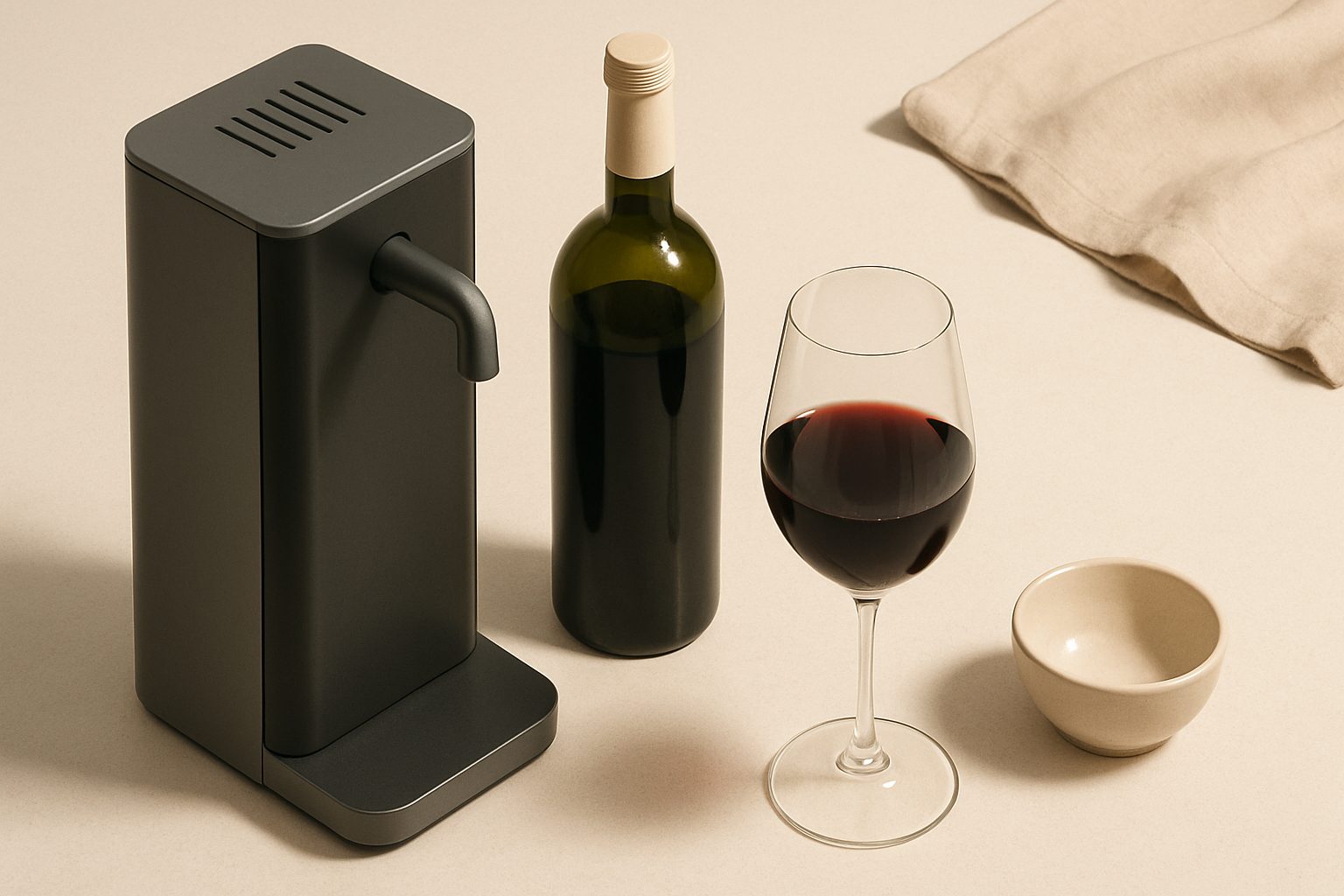
Box Wine Dispenser vs Bottle Wine Dispenser UK: Which Is Right for You?
If you're thinking about buying a wine dispenser, you're probably weighing two main options: a tap dispenser for bag-in-box wine, or a traditional pourer for bottles. It's not a straightforward choice. Both have genuine advantages depending on how you drink wine, how much you spend, and what matters most to you.
What You're Actually Comparing
A box wine dispenser (or bag-in-box tap dispenser) keeps wine fresh for weeks once opened by limiting air exposure. You pour from a tap, and the internal bag collapses as you use it. A bottle dispenser is essentially a pouring aid—a simple device that controls flow from a standard bottle, or in some cases, a wine fridge that chills bottles and may include a pouring mechanism.
These aren't equivalent products, which is why the choice depends more on your drinking habits than on which one is "better."
The Cost Argument
Box wine dispensers win on price per glass. A 3-litre box typically costs £12–£18 for decent everyday drinking wine, which works out to roughly £1–£1.50 per 175ml glass. An equivalent bottle of the same quality runs £5–£8, giving you four glasses per bottle. Do the maths: box wine is genuinely cheaper, often by 30–40%.
However, this only matters if you actually finish the box before it degrades. Box wine stays drinkable for 4–6 weeks after opening, depending on the wine. If you're a casual drinker who opens a bottle every few days, a box could sit half-full for months and go off. Bottle wine gives you the flexibility to open one whenever you want without waste.
The dispenser itself costs £30–£80 for a basic tap model, compared to £15–£40 for a bottle pourer. If you're buying multiple boxes, the dispenser pays for itself within a few months.
Freshness and Shelf Life
This is where box wine genuinely shines. The sealed tap system keeps oxygen out, so an opened box stays fresh longer than an opened bottle. A bottle loses quality within days once the cork is out—wine oxidises and starts to flatten. Some wine fridges claim to preserve bottles better, but they can't match the protection of a bag-in-box system.
If you leave wine half-drunk for a week, a box will be noticeably fresher. A bottle will have deteriorated. That matters if you're buying mid-range wine; cheaper wine doesn't have enough complexity to lose much, and expensive wine probably deserves better treatment than leaving it open anyway.
Convenience and Social Context
Here's where bottle dispensers (and wine fridges) come in. A chilled bottle on the counter is simpler to manage during a party. Guests pour their own. There's no tap to explain, no "the bag's inside the box" moment. If you're frequently hosting or serving wine to people unfamiliar with box wine, a traditional setup feels more familiar.
A box dispenser works fine socially, but it does require the wine to be set up, the bag loaded, and the tap explained to anyone who hasn't used one before. For casual entertaining, it's no hardship. For formal dinners, some people find it less elegant.
Environmental Impact
Box wine has a genuine eco-advantage if you care about that. A 3-litre box produces less packaging waste per litre than three separate bottles. The cardboard is recyclable, and you're buying less glass overall. Bottle wine isn't terrible, but ounce-for-ounce, boxes are better for the environment.
That said, the environmental benefit only exists if you're choosing between equivalent wines. Buying a cheap box you'll waste is worse than buying an expensive bottle you'll finish.
Wine Quality and Selection
This is the honest part: box wine in the UK has improved massively in the last decade, but selection and quality tier still skew towards budget and mid-range. Supermarket boxes are usually £12–£18 for decent drinking. You can find excellent value—a £14 box is often better than a £10 bottle—but if you want to explore specific regions, producers, or premium wines, bottles give you far more choice.
If your wine shopping is "I want a decent Rioja" or "I prefer natural wine," boxes might disappoint. If you're after "good red for a weeknight," boxes deliver.
The Practical Decision Tree
Choose a box dispenser if:
- You drink wine regularly (at least a glass or two most weeks)
- You want to spend less per glass
- You prefer consistent supply and don't mind opening a box every month or so
- You value reduced oxidation and longer shelf life after opening
- You're not bothered about wine variety
Choose a bottle dispenser (or wine fridge) if:
- You drink wine casually or socially
- You want maximum flexibility in what you drink and when
- You host frequently and want a familiar, straightforward setup
- You're willing to pay more per glass for choice and control
- You prefer not to open a new box until you've finished the last
The Honest Overlap
Both work. A bottle dispenser doesn't have to be fancy—a simple pourer is enough. Box wine doesn't have to be budget rubbish; mid-range boxes are genuinely good. The choice is about your rhythm and priorities, not about one system being objectively better.
If you're on a tight budget and drink wine regularly, a box dispenser saves real money. If you drink occasionally or care deeply about variety, bottles are simpler. Many UK households use both—a box for weeknight drinking, bottles for trying something specific or for entertaining guests who expect a more traditional setup.
The dispenser itself is the smallest part of the decision. It's the wine consumption pattern that matters.
More options
- Electric Home Wine Dispensers (Amazon UK)
- Wine Preservation Systems (Argon / Vacuum) (Amazon UK)
- Countertop Wine Cooler Dispensers (Amazon UK)
- Box Wine Dispensers & Bag-in-Box Taps (Amazon UK)
- Wine Dispenser Gift Sets (Amazon UK)