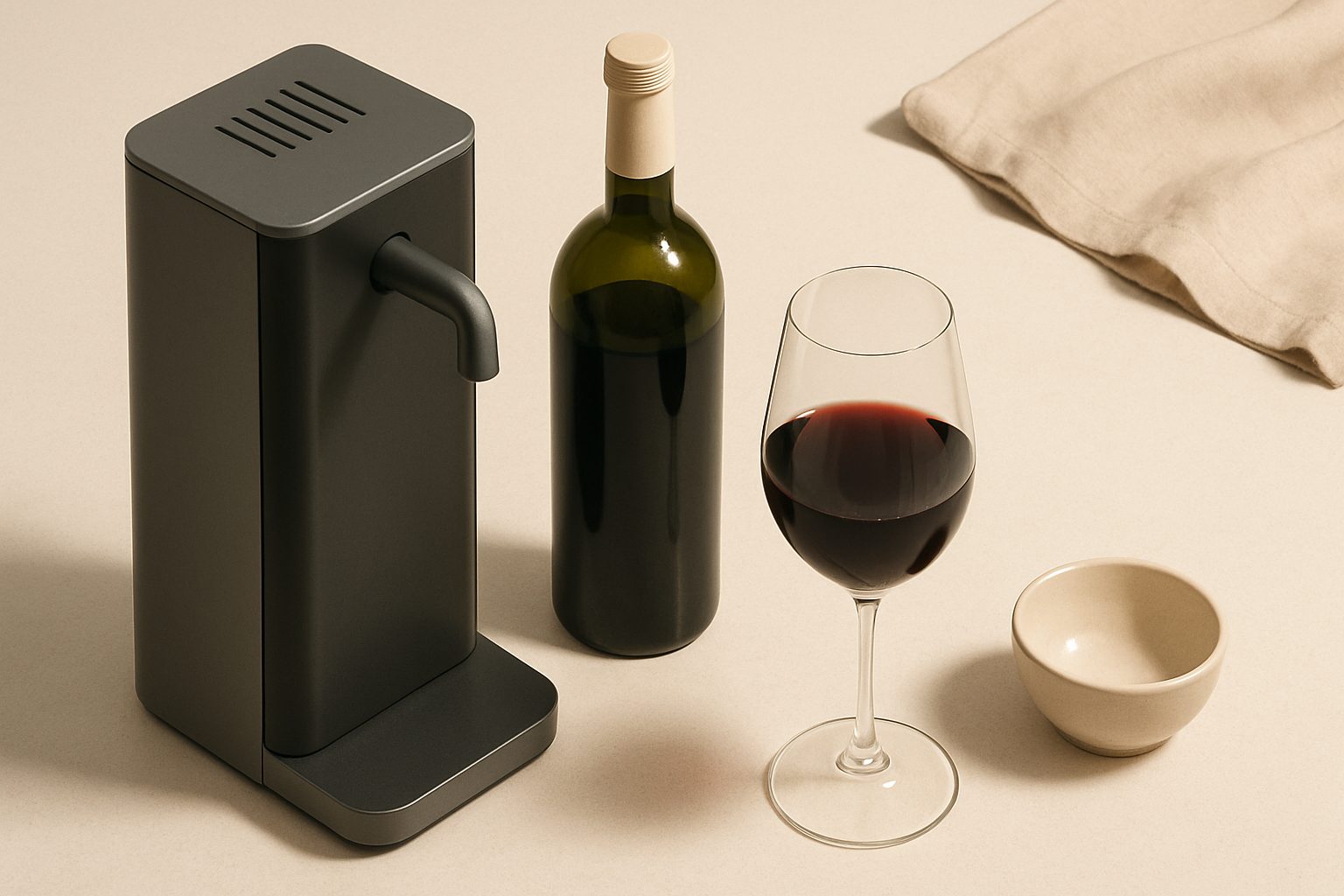
Best Wine Dispensers with Temperature Control UK (Chilled & Served Right)
If you're serious about wine, serving temperature isn't optional—it's fundamental to what's actually in the glass. A 2°C difference can mask a white wine's acidity or flatten a red's tannin structure. Wine dispensers with integrated temperature control solve this by keeping bottles at their ideal serving point without requiring ice buckets, decanting routines, or that awkward moment when guests realise your "chilled" red is actually room temperature.
The catch: not all temperature-controlled dispensers work the same way. Some chill aggressively but cost £3,000 to run annually. Others are quieter and cheaper but can't pull a Sauternes down to 6°C. This guide walks through the technology, what to actually look for, and the genuine trade-offs between the two main cooling methods.
How Temperature Control Actually Works
Two technologies dominate the wine-dispenser market: compressor cooling and thermoelectric cooling. Both work, but they're solving different problems.
Compressor systems use a refrigeration cycle—the same technology in your kitchen fridge. They pump refrigerant through coils, absorbing heat from the wine cabinet and releasing it outside. They're powerful: capable of cooling to 5°C even in a warm room, and they hold temperature reliably under load. Trade-off: they're noisier (usually 40–50 dB), generate heat that needs venting, and take up more space. You'll also pay more upfront and in running costs.
Thermoelectric coolers use the Peltier effect—running electrical current through a semiconductor to move heat. They're silent (30–35 dB), compact, and cheaper to install. The downside is limited cooling power. On a warm day with the dispenser open, a thermoelectric unit might struggle to hold temperature, and they're not reliable below 10°C ambient. They also work less efficiently as the target temperature drops.
For most UK homes, this distinction matters: if your kitchen is reasonably cool and you're serving wines at 10–16°C (reds, whites, Champagne), thermoelectric is quieter and cheaper. If you're serious about cellar storage (8–12°C), want Sauternes at 6°C, or live somewhere warm, a compressor unit is the only sensible choice.
What to Look For
Temperature range and precision. Check the spec sheet honestly: what's the lowest temperature in your actual ambient conditions? Many thermoelectric units list 5°C as a minimum, but that's in an air-conditioned room. In a 20°C kitchen, you'll realistically get 12–14°C. Compressor units typically maintain their stated range regardless.
Capacity and bottle count. Dispensers range from 2-bottle countertop units to 12+ bottle built-in cabinets. Bigger isn't always better—a 12-bottle unit running constantly consumes far more electricity than a 4-bottle model with proper insulation. For home use, 4–6 bottles covers most scenarios: red, white, sparkling, and room for a backup.
Noise level. If this sits in your kitchen or dining room, 50 dB is genuinely noticeable during conversation. Thermoelectric units at 30–35 dB are virtually silent. Compressor models around 40 dB are acceptable; anything above 45 dB becomes intrusive.
Insulation quality. This determines how hard the cooling system has to work. Look for double-paned glass and foam insulation around the cabinet. Poor insulation means your cooling unit runs constantly, wasting energy and shortening its lifespan.
Pour mechanism. Some dispensers use gravity-fed buttons; others have motorised pumps. Gravity-fed is simpler and quieter but requires precise tilting. Motorised pumps pour reliably but add noise and complexity. Both work fine if built properly.
Compressor vs Thermoelectric: The Real Trade-offs
A mid-range compressor dispenser (say, 6 bottles, 50L) typically costs £1,200–£2,000 upfront and around £100–£150 annually to run (depending on ambient temperature and how often you open it). It keeps temperature rock-solid and handles busy days—multiple pours, door opens—without fluctuating.
A comparable thermoelectric unit costs £400–£800 and runs for roughly £30–£50 per year. It's quieter, takes up less space, and requires no external venting. The catch: on a 25°C day, performance degrades noticeably, and you're restricted to wines that drink well at 12–16°C.
For most UK households (ambient temps 15–20°C, moderate use), thermoelectric wins on cost and practicality. If you're a proper enthusiast, entertain frequently, or live in a warm south-facing kitchen, compressor is worth the investment.
Running Costs and Electricity
A compressor unit draws 150–250W continuously. Run it 8 hours daily (typical for a hospitality setting), and that's roughly 400–600 kWh annually. At current rates, expect £80–£150 per year.
Thermoelectric units draw 50–100W but cycle on and off more frequently. Real-world annual consumption is £25–£50.
If electricity cost is your primary concern, thermoelectric wins decisively. If temperature precision matters more, compressor's extra running cost is worth it.
Key Specifications to Compare
- Temperature range: Realistic minimum under UK ambient conditions
- Power consumption: Listed wattage (multiply by hours of use for annual cost)
- Noise: Measured in dB—anything under 40 is home-appropriate
- Insulation: Double-glazed, foam-filled cabinet
- Warranty: Look for 2–3 years on the cooling unit itself
- Build materials: Stainless steel resists fingerprints and kitchen humidity better than plastic trim
Bottom Line
Choose thermoelectric if you want quiet, low running costs, and reliable 12–16°C service for reds and whites. Choose compressor if you need true cellar temperature, live in a warm climate, or serve a lot of Sauternes and other cool-weather wines.
In either case, verify the actual minimum temperature the unit achieves in your kitchen conditions—don't assume the marketing spec applies to your 22°C south-facing space. The best wine dispenser is the one that actually holds the temperature your wines need, consistently.
More options
- Electric Home Wine Dispensers (Amazon UK)
- Wine Preservation Systems (Argon / Vacuum) (Amazon UK)
- Countertop Wine Cooler Dispensers (Amazon UK)
- Box Wine Dispensers & Bag-in-Box Taps (Amazon UK)
- Wine Dispenser Gift Sets (Amazon UK)