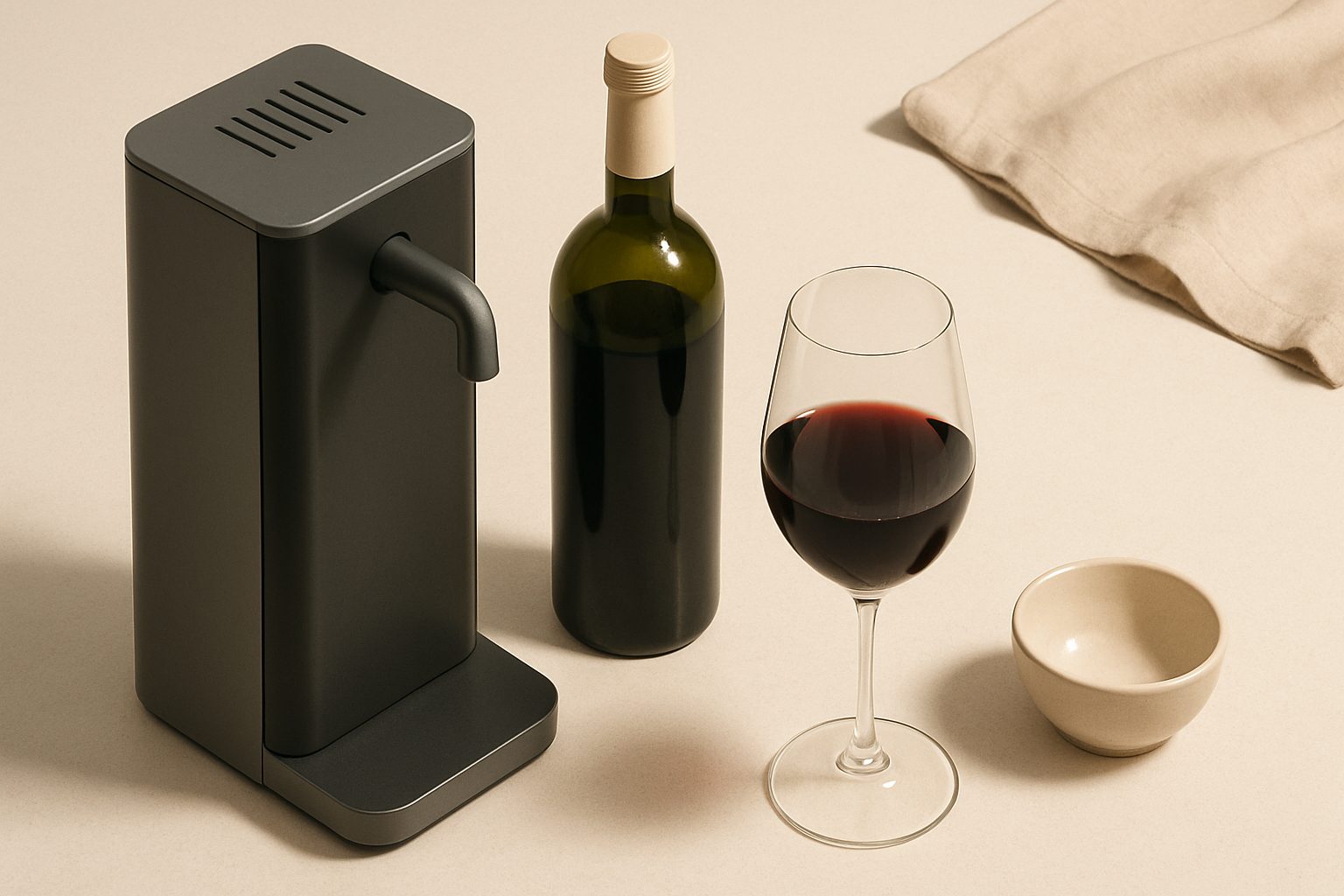
Best Home Wine Dispensers UK 2024: Complete Buyer's Guide
If you've got more than a few bottles on hand, a home wine dispenser is a sensible investment—not just for convenience, but for keeping wine in proper condition. The difference between a wine that's been sitting open for three weeks and one that's been properly preserved is dramatic. This guide covers the main categories available in the UK market, what they actually do, and what matters when choosing one.
Why a Home Wine Dispenser Makes Sense
Wine oxidises quickly once you break the seal. A decent bottle left open on the kitchen counter deteriorates within days. A proper dispenser system either keeps the bottle sealed with inert gas, maintains precise temperature, or both. If you're drinking wine regularly—more than one bottle a week—a dispenser pays for itself in preserved bottles alone. You'll also stop buying expensive wine and watching it turn to vinegar.
Wine Preservation Systems
Preservation systems are the entry point to this category. These work by replacing the oxygen inside a bottle with argon or nitrogen gas, which prevents oxidation. The bottle stays sealed until you pour.
The best-known option here is the Coravin system, which uses a thin needle to pierce the bottle's foil and cork without removing it. You pour, the needle retracts, and the bottle is sealed again with gas. A single capsule preserves a bottle for weeks. It's elegant and works reliably, though the ongoing cost of capsules (around £3–5 per bottle) adds up if you're using it daily.
Simpler vacuum-seal systems are cheaper upfront—£20–60—but less reliable. They pull air from the bottle and rely on a rubber stopper, which doesn't seal as tightly as a proper cork or gas injection. Most people find these work for 5–7 days maximum before noticeable deterioration.
Best for: People who open bottles irregularly, want to taste different wines without committing to whole bottles, or who buy premium bottles they want to preserve across multiple sittings.
Temperature-Controlled Wine Coolers
If you want wine to last longer and be served at the right temperature, a wine cooler is where the real investment begins. These units maintain a constant temperature—typically 8–18°C depending on the model—and sit somewhere between a standard fridge and specialist oenophile equipment.
Most countertop models hold 8–18 bottles and draw between 80–150W of power. They're quiet enough for a kitchen or dining room. The key difference between models is temperature range: some stick to a narrow band (say, 10–14°C), which is good if you drink primarily one style of wine, whilst others allow you to set anywhere from 5–20°C, giving you flexibility.
Compressor-based coolers (most models under £300) cool reliably and handle temperature swings better. Thermoelectric models are quieter and cheaper but less effective in warm kitchens and struggle with room temperatures above 25°C. In the UK, unless you're running a very warm kitchen or living somewhere particularly hot, either type works fine.
The catch is cost and space. A decent dual-zone cooler (separate temperature zones for reds and whites) starts around £400–600. You're also looking at permanent kitchen real estate.
Best for: Regular wine drinkers who want bottles in proper condition and the right serving temperature, and who have space for a dedicated unit.
Countertop Wine Dispensers
This is where "wine dispenser" becomes more literal. These are compact units—many resembling a small fridge—that hold a full bottle (or sometimes up to three) and pour at the touch of a button. Some combine cooling with preservation gas injection.
The appeal is straightforward: you get chilled wine on demand, and the system keeps what's left sealed. Most countertop dispensers work with standard 750ml bottles, though a few accommodate larger formats.
Quality varies considerably. Budget models (£100–200) often have inconsistent cooling and can be noisy. Mid-range units (£250–500) from established brands are more reliable. You're paying for insulation quality, compressor reliability, and how well the seal works around the bottle.
The main limitation is speed—you're waiting 15–30 seconds per pour whilst wine travels through cold tubing—and you can only have one bottle on dispense at a time. If you're serving multiple wines at a dinner party, these aren't ideal. They're better suited to everyday use: pouring a glass of white without opening a fresh bottle, or keeping a red at the right temperature between pours.
Best for: Apartment dwellers, people with limited storage, or anyone wanting chilled wine on tap without a full wine cooler's footprint.
Wall-Mounted Wine Dispensers
Wall-mounted units are less common in UK homes but are growing in popularity. They typically hold 2–4 bottles and mount above a counter or bar area. Some are purely decorative (bottles rest in a rack, you pour manually), whilst others have motorised dispensing mechanisms.
The practical advantage is they free up floor and counter space. The aesthetic advantage is obvious—a well-designed wall-mounted dispenser looks intentional and polished. The downside is installation: you need suitable wall space, and motorised versions require power nearby.
These are best viewed as a design statement as much as a functional choice. If your kitchen or dining space suits one visually, they can work well. Pure functionality-wise, a countertop unit often gives you more flexibility for less fuss.
Best for: People with limited counter space, strong design preferences, or who want wine dispensing to be a visual feature.
What Matters When Choosing
How much you spend on wine. If you're buying £8 bottles from the supermarket, a £400 cooler doesn't make sense. If you're regularly buying £25+ bottles and not finishing them quickly, it's a practical choice.
How often you drink. Opening bottles more than three times a week? A cooler is worth it. Once a week or less? Preservation system or vacuum sealer covers it.
Space available. Realistic about where this will live. A 60cm cooler needs actual space. If that's not available, work backwards—countertop dispenser, or stick with preservation.
Temperature stability at home. If your kitchen swings from 15–26°C seasonally, a cooler is more essential. Stable, cool homes get more mileage from simpler systems.
Bottle types. Mostly drinking red? A single-zone cooler is fine. Regularly switching between red, white, and sparkling? Dual-zone or a preservation system gives you more flexibility.
Start with your actual drinking habits, not with gadget desire. A £50 preservation system that you use might be smarter than a £500 cooler gathering dust because it's inconveniently located.
More options
- Electric Home Wine Dispensers (Amazon UK)
- Wine Preservation Systems (Argon / Vacuum) (Amazon UK)
- Countertop Wine Cooler Dispensers (Amazon UK)
- Box Wine Dispensers & Bag-in-Box Taps (Amazon UK)
- Wine Dispenser Gift Sets (Amazon UK)