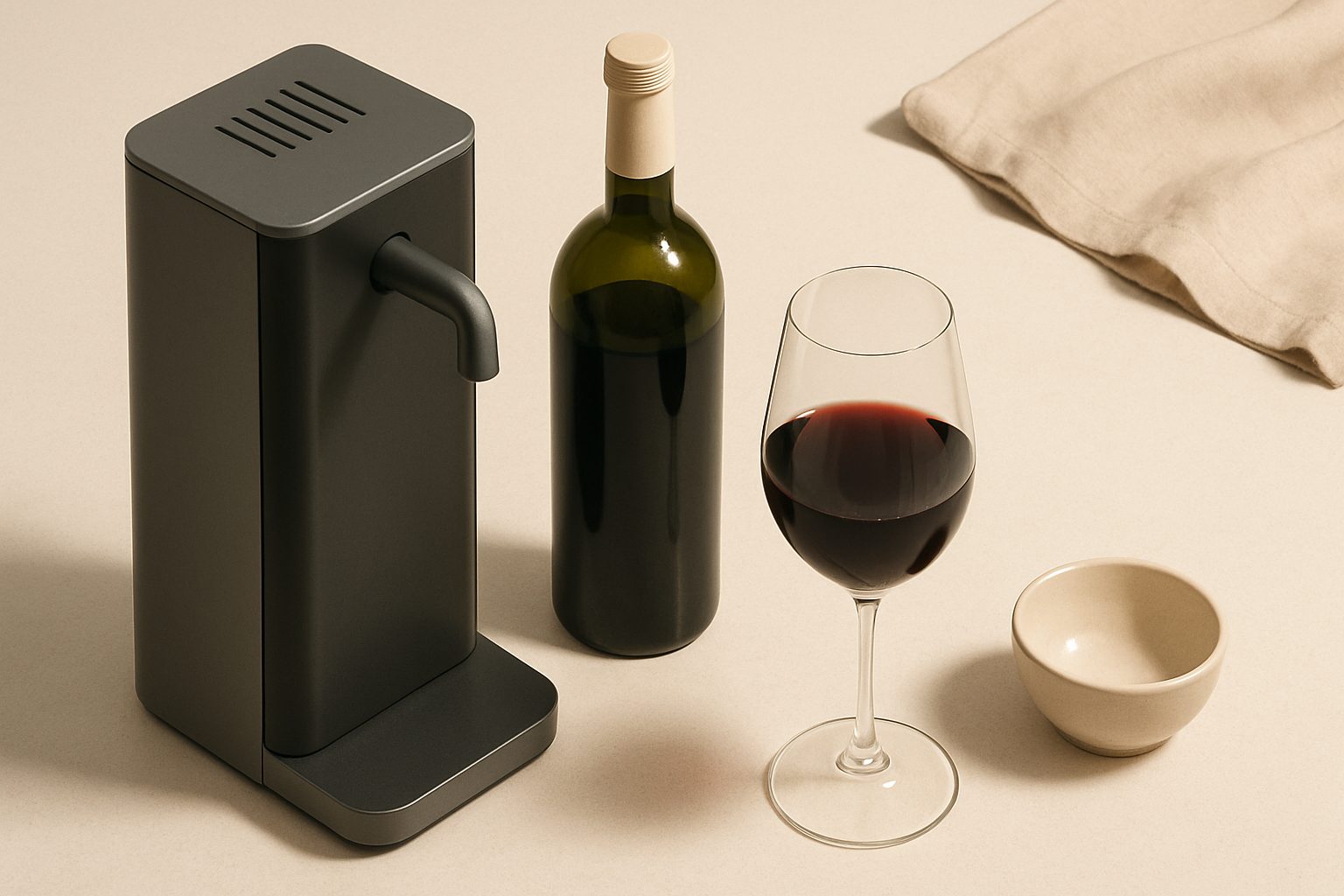
Best Countertop Wine Dispensers for a Home Bar UK 2024
If you're building a home bar or want wine readily available without opening a new bottle every evening, a countertop wine dispenser sits somewhere between a novelty gadget and a genuinely useful appliance. They're designed to keep wine fresh longer—typically two to four weeks—by controlling oxidation. But not all models work equally well, and size matters when you're fitting one onto a bar cart or kitchen worktop.
What makes a good countertop wine dispenser
A wine dispenser's job is simple in theory: pour wine without exposing the rest of the bottle to air. Most use one of two mechanisms. Inert gas systems (nitrogen or argon) create a protective layer above the wine, slowing oxidation. Vacuum systems pull air out of the bottle as you pour. Both work, though gas systems are more reliable over time because they don't rely on a perfect seal—a worn rubber gasket on a vacuum model can fail gradually, letting air back in.
The best ones use food-grade gas cartridges or a sealed system you don't refill yourself. Anything requiring you to manually introduce gas becomes a pain after the first week. Equally, pay attention to the pump mechanism. A lever or button that feels cheap will annoy you every single time.
Types of dispensers and how they work
Gas-based systems (usually argon or nitrogen) are the most common. You insert a standard cartridge—similar to those used in soda makers—and each time you pour, a tiny amount of gas is released into the bottle to replace the volume you've taken out. They're reliable once installed, though you'll replace cartridges every few bottles. They tend to be quieter and require less maintenance than vacuum systems.
Vacuum models use a hand pump or electric pump to extract air as you pour. They're cheaper upfront and need no cartridges, which appeals to people who dislike ongoing costs. The catch: they depend on an airtight seal, and over six months, even small leaks around the pour mechanism mean the seal degrades. Most vacuum systems work well for their first bottle or two, then gradually lose effectiveness.
Pourer-only models (essentially sophisticated spouts) don't claim to keep wine fresh indefinitely—they just minimise air contact during pouring. They're affordable and genuinely useful if you're simply after convenience, but don't expect four weeks of freshness.
Compact models for limited space
Space is the real constraint in UK homes. A typical countertop dispenser needs roughly 15–20 cm of worktop depth and 10–15 cm of width, though some sit closer to 25 cm tall, which matters if your bar cart has shelves.
Gas cartridge dispensers come in two footprints. Upright models (shaped like a small appliance) hold a standard wine bottle and typically need about 20 cm × 15 cm of space. Tabletop units designed to sit atop bottles are more compact—roughly 12 cm × 10 cm—but require more stable placement since the bottle sits above the pump mechanism. These are genuinely space-efficient and work well on bar carts where floor space is precious.
Vacuum models are almost always compact because they've no cartridge housing. Most are under 15 cm × 10 cm, which is why they appeal in small kitchens. They're easier to store, but remember that reliability drops faster than space-saving increases.
Key considerations before buying
Capacity and longevity: A standard 750 ml bottle will stay fresh for two to four weeks in a gas system, depending on how often you pour. If you're opening a bottle, drinking two glasses, and leaving the rest for a month, you'll be satisfied. If you're the sort who forgets a bottle for six weeks, the system won't preserve it indefinitely—nothing will. Vacuum systems typically manage two to three weeks before noticeably degrading.
Cost of ongoing use: Gas cartridges for standard systems run £3–£6 each and typically last through two to four bottles, depending on the system. Work out whether you'll actually use it enough to justify the expense. If you open a bottle once a week, cartridges are negligible. If you're an occasional drinker, you're paying for a feature you don't need.
Ease of fitting and use: Avoid anything that requires tools or fiddling to install. The best ones take seconds—you just insert the cartridge and insert the bottle. Similarly, the pour mechanism should feel solid. Cheap levers that wobble or buttons that require firm pressing will grate on you.
Material and build quality: Stainless steel lasts longer than plastic, especially around the pour spout where oxidation and wine residue accumulate. Plastic-bodied models are cheaper but show wear faster. Check reviews specifically mentioning the seal—that's where cheapness shows up first.
Noise: If your home bar is somewhere you relax, a loud pump is genuinely annoying. Gas systems are nearly silent. Electric vacuum pumps are loudest. Hand-pump vacuums sit in the middle.
The honest reality
Wine dispensers aren't essential—they're convenience devices that work best if you're a regular drinker who opens bottles throughout the week. They genuinely do extend freshness, but not miraculously. Expect two to four weeks of reliable preservation, then accept some degradation. They also work better with lighter wines (whites, rosés, lighter reds) than with full-bodied reds, which degrade faster anyway due to their tannin structure.
For UK homes with limited space, opt for a gas-cartridge model—they're more reliable than vacuum systems and don't demand attention. Size them to fit your actual kitchen or bar space, not aspirational bottles. And if you drink wine twice a week, you'll get years of use. If you're testing the concept, rent before buying, or choose a budget model you won't regret abandoning if it doesn't become a habit.
More options
- Electric Home Wine Dispensers (Amazon UK)
- Wine Preservation Systems (Argon / Vacuum) (Amazon UK)
- Countertop Wine Cooler Dispensers (Amazon UK)
- Box Wine Dispensers & Bag-in-Box Taps (Amazon UK)
- Wine Dispenser Gift Sets (Amazon UK)